Nº 008 · Ingredients
Nº 008, Vanilla Bourbon: Terroir in a Pod
Real vanilla is the cured pod of an orchid that must be pollinated by hand; the Bourbon vanilla of Madagascar became the world's reference, but it is only one of several truths.
Real vanilla is the cured pod of an orchid that must be pollinated by hand; the Bourbon vanilla of Madagascar became the world's reference, but it is only one of several truths.
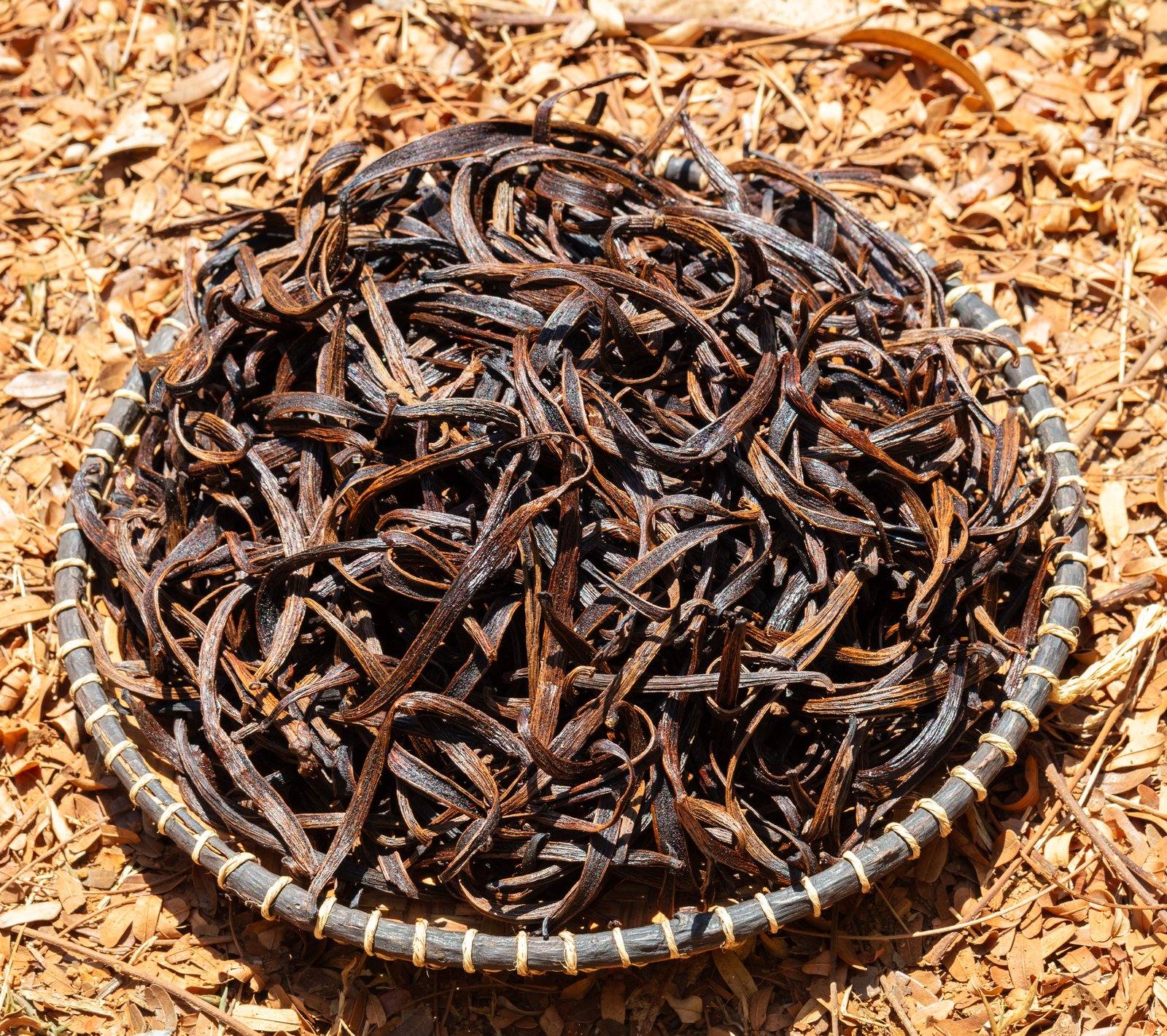
Vanilla is not a bean, and it is not plain. The pods traded as vanilla are the cured fruit of a climbing orchid, Vanilla planifolia, a vine native to Mexico and Central America that climbs by fleshy roots and can run for many metres up a supporting tree. Kew's plant record lists the uses plainly: flavouring, medicines, and perfumery. Of those three careers, perfumery may be the one that best understands what the pod actually is, a concentrate of place and labour that no single molecule reproduces.
The University of Florida's extension service sets out the discipline the plant imposes. A vanilla vine flowers over a season of roughly two months, but each individual flower opens for a single day. Miss that day and the flower falls unpollinated. Inside its native range the vine had a partner for the work: Cornell's conservatory notes that a particular Melipona bee pollinated the flowers in Mexico, and that when the vine was carried to Réunion in the Indian Ocean in the 19th century, the plants grew but set no pods, because the bee had not travelled with them.
The solution came from Réunion itself. Edmond Albius, a young enslaved boy on the island who had been taught to cross-pollinate other flowers, worked out how to do by hand what the bee did in Mexico: lift the small flap inside the flower that keeps its male and female parts apart, and press the pollen across. Cornell records that the technique he found is still the technique in use. The Bishop Museum's plant account adds the working detail: flowers are pollinated by hand before noon, and about six in ten attempts succeed. Every pod in the world trade exists because a person reached that flower on its one day.
Pollination starts a long clock. The Florida extension puts it at about nine months for a successfully pollinated flower to become a mature pod, and Purdue's horticulture notes agree on the shape of the calendar: pods are gathered fully grown but still unripe, eight to nine months after flowering. What is picked at that point has almost no vanilla scent. The scent is made afterwards, in the cure.
Curing is a second harvest conducted in sheds rather than fields. The pods are heated, sweated, dried and conditioned in a sequence of steps that the Florida extension counts at several further months, and Purdue describes the effect directly: curing ferments and dries the pods and develops the flavour the green fruit did not have. It is during the cure that vanillin, the best known of the pod's aromatic compounds, comes forward, joined by the hundreds of quieter compounds that separate a cured pod from a synthetic shortcut. The Bishop Museum calls vanilla the second most expensive natural spice after saffron. The calendar explains the price.
None of this began with Europe. The Bishop Museum's account records that the Aztecs made extensive use of dried vanilla to flavour their chocolate drink, that the pod's name in their language, tlilxochitl, became the Spanish vaynilla, and that chocolate and vanilla reached Europe together, introduced by the Spanish around 1530. The pairing that still structures the gourmand family in perfumery, chocolate against vanilla, is an Aztec inheritance that outlived the empire that made it.
The vine travelled because the bee problem had been solved. Cuttings went out from Réunion to the other Indian Ocean islands, Madagascar among them, and the name Bourbon, the old name of Réunion itself, attached to the style of pod the islands produced. Purdue's horticulturists note where the trade settled: most commercial production now sits in the tropics of Mexico and Madagascar, warm and humid country where the vine is grown up the trunks of shade trees. Madagascar's pod, deep, sweet and rounded, became the reference profile, the vanilla that other vanillas are described against.
But a reference is not the whole story. The Cook Islands account in the Bishop Museum treats the Tahitian type as its own thing, a narrow-leaved form shaped by different islands, different soils and a different cure, and growers in Mexico will tell you the original homeland pod runs drier and woodier than the Madagascar reference. This is terroir in the strict sense: the same species, read through different ground and different handling, giving the perfumer materially different ingredients under one name.
For the perfumer, the lesson of the pod is patience converted into warmth. Vanilla absolute and tincture bring the balsamic, sweet depth that anchors the oriental and gourmand families, and they do it with a complexity that isolated vanillin cannot imitate, because the cure builds a chorus rather than a soloist. The pod took a day of flower, a pair of hands before noon, nine months on the vine and months more in the curing shed. A formula that uses it well is spending all of that time at once. The least the wearer can do is notice which island it came from.
One letter each week: what mattered in perfumery, and what to smell next.
Free. Unsubscribe anytime.