Nº 005 · Ingredients
Nº 005, Bergamot: The Top Note of Calabria
Nearly all the world's bergamot oil is pressed from the rind of a bitter citrus in one Italian region, and it has been the opening sentence of perfumery for three hundred years.

Nearly all the world's bergamot oil is pressed from the rind of a bitter citrus in one Italian region, and it has been the opening sentence of perfumery for three hundred years.
Most perfumes begin with bergamot, and most noses never notice. It is the opening chord of the eau de cologne, the bright first impression that clears the way for everything after. Of all the citrus oils in the perfumer's palette, it is the one that matters most, and it comes, still, almost entirely from one place.
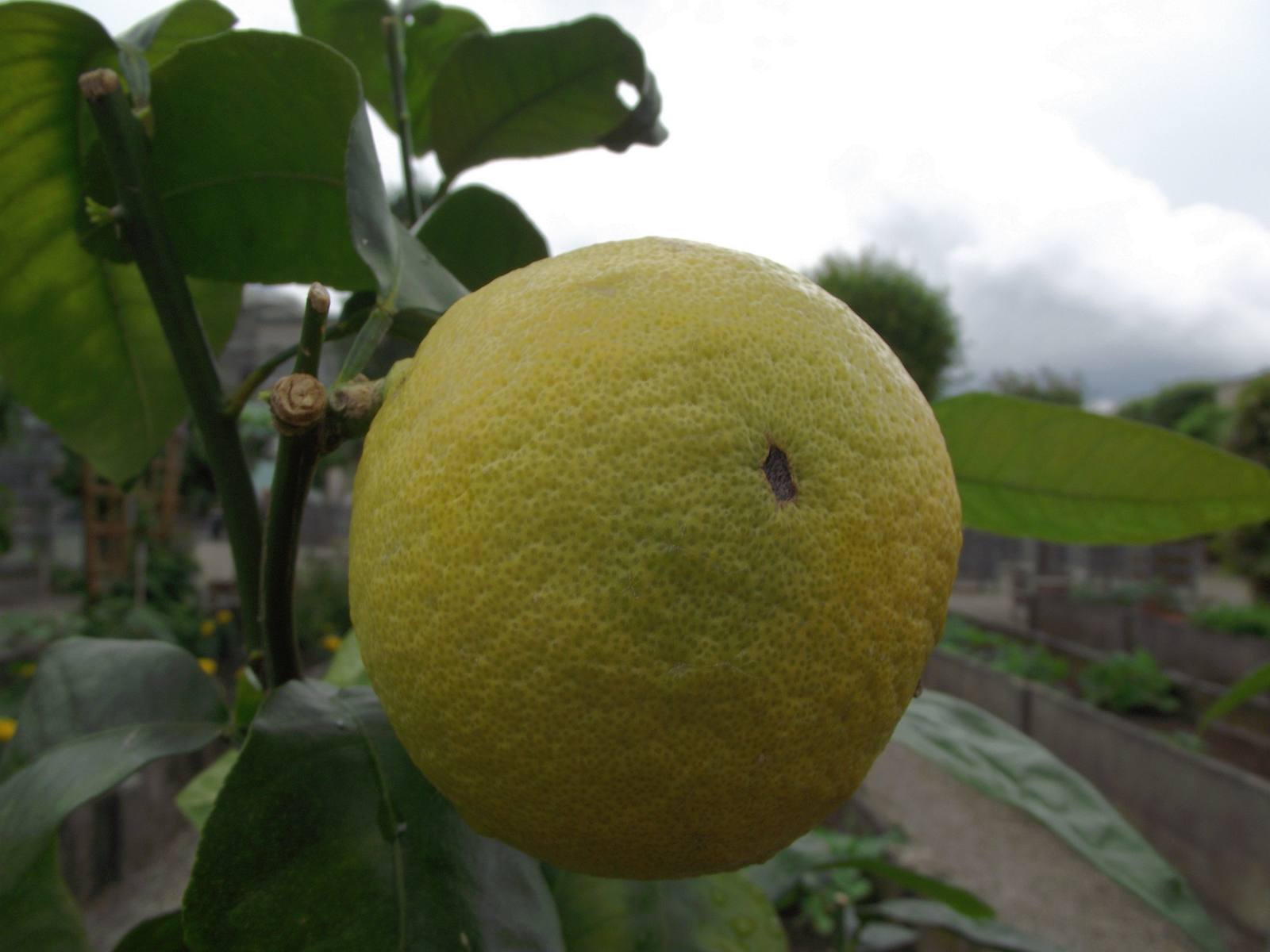
The tree is Citrus aurantium var. bergamia, a member of the Rutaceae family. Eden Botanicals traces its origin to northern Italy or the Canary Islands and describes small, round, knobby, somewhat bitter fruits, the peels of which are pressed for their aromatic oil. Later cultivation centered on the Calabria region of southern Italy, which, according to Eden Botanicals, now produces about 90 percent of the world's supply of bergamot oil. The title of this piece is editorial shorthand rather than a legal claim, but the concentration is real: bergamot is a Calabrian crop in a way almost no other perfume material belongs to a single region.
The oil is cold expressed from the rind. It sits in the peel and is pressed out rather than distilled, and it is a top note by every measure. Citrus peel oils are predominantly composed of the highly volatile monoterpenes limonene and pinene, Eden Botanicals explains, the perfect top note molecules perfumers commonly rely on. Bergamot carries a further distinction that no other citrus peel oil shares: it contains up to 30 percent of the ester linalyl acetate, fruity-woody-floral, an antioxidant also found in lavender. That ester gives bergamot a roundness and depth the other citruses lack. It is bright, but not thin.
That roundness is why bergamot became the opening of modern perfumery. Eden Botanicals calls it one of the most commonly used essential oils in perfumery, where it adds a rich top note, especially in eau de cologne types; combined with neroli and lemon, it produces the initial fresh fragrance impression. The cologne accord, bergamot with neroli, lemon, lavender and rosemary, is three centuries old and still the most copied opening in fragrance. Bergamot is its spark.
The fragrance is equally acceptable to men and women, and it blends with almost any flower oil, giving it considerable versatility. (Patricia Davis, quoted by Eden Botanicals)
Outside perfumery, bergamot lives a famous double life: it is, as Eden Botanicals puts it, the legendary perfume of Earl Grey tea. The same oil that opens a cologne flavors the world's most famous tea, and that says something about bergamot's character. It is fresh, sweet, citrus and green, with a light floral and bitter undertone, and that bitter edge is the Calabrian signature. It keeps the brightness from turning sugary and gives the top note something for the florals to hold onto.
The food industry's appetite is part of the story now. Eden Botanicals reports that in recent years the food industry's demand for whole bergamot fruit has been increasing, which has made it harder for essential oil producers to find raw material, with higher prices as the result. Unlike most citrus, where oil and juice are co-products of the same business, bergamot oil extraction is the primary business for its producers, with juice as the by-product. The oil trade is not a side stream. It is the reason the groves exist.
One caution belongs in any honest account of bergamot. The oil is photosensitizing: Eden Botanicals recommends high dilution on skin, or the use of a bergamot FCF oil, in which the furanocoumarin bergapten, responsible for the skin's extreme sensitization to sunlight, has been removed. It is the same family of chemistry that later troubled oakmoss, another story in this series, and it is a reminder that the brightest natural materials often carry the sharpest edges.
Bergamot's most famous partnership is the chypre. When François Coty launched Chypre in 1917, the style he crystallised combined sparkling bergamot with a floral heart draped over a base rich in oakmoss and labdanum, in the Perfume Society's account. The architecture is a study in contrast: the brightest possible opening over the darkest possible base, and bergamot is the brightness. Without it, the chypre has no lift; without the moss, the bergamot has nowhere to land. The two materials were made for each other, which is why they keep meeting in formulas a century later.
There is also a quieter reason bergamot endures. It is one of the few top notes that behaves well: volatile enough to open a perfume, substantial enough, thanks to that linalyl acetate, to bridge into the heart instead of vanishing. Most citrus oils flash and are gone. Bergamot flashes and hands the composition over. That reliability is why perfumers reach for it almost without thinking, and why its absence is felt more than its presence.
Bergamot will never be the note a perfume is about. It evaporates too fast for that, and by the second hour it is mostly a memory. But ask what modern perfumery would sound like without its opening chord, and the silence is instructive. It would be like orchestral music with no first violin: possible, but unrecognizable.
One letter each week: what mattered in perfumery, and what to smell next.
Free. Unsubscribe anytime.