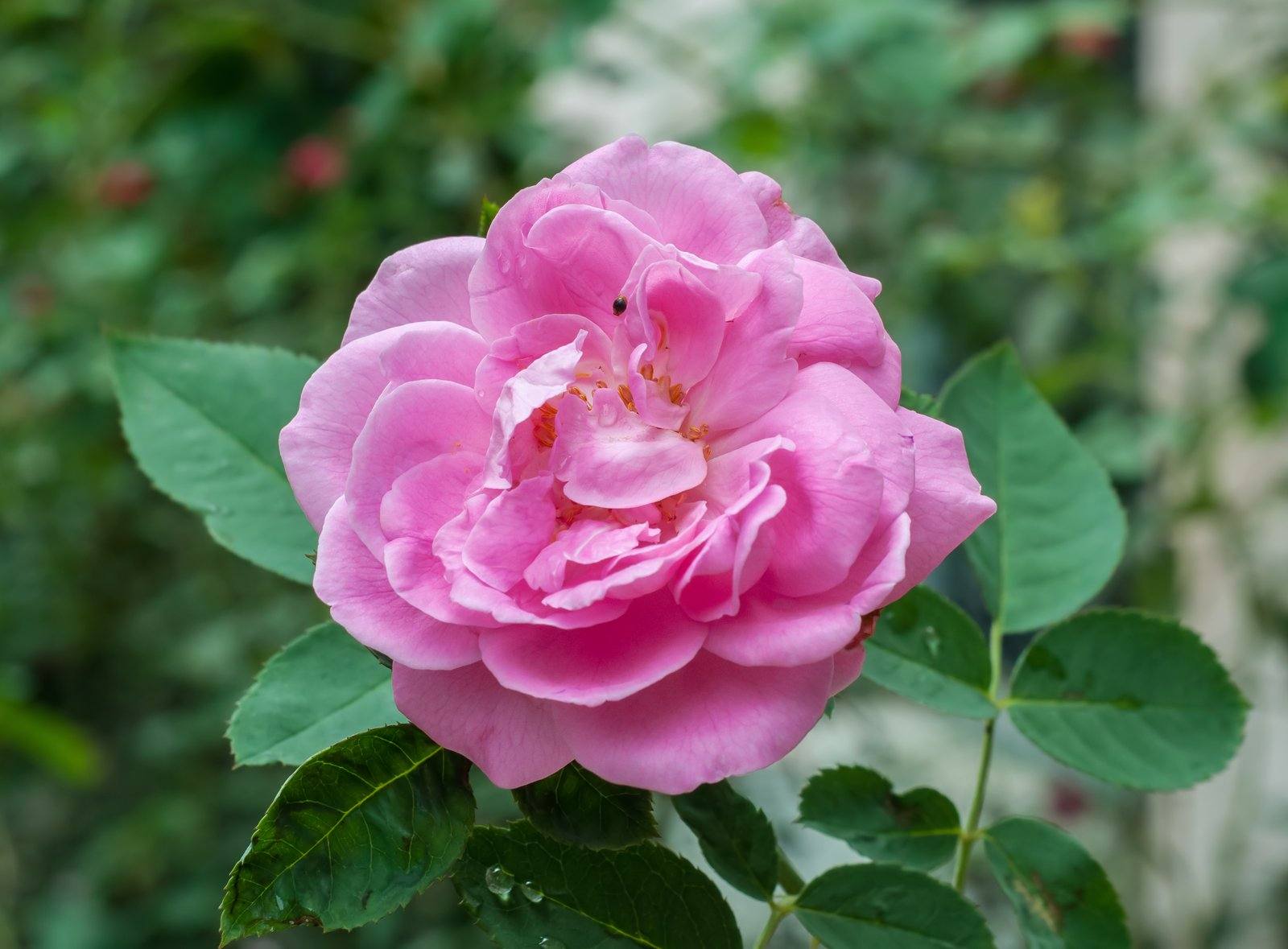
The rose of perfumery's old heartland has a calendar for a name. Rosa centifolia blooms around Grasse in May, and for that single month it is called the Rose de Mai. It is also called the Provence rose, the cabbage rose, the rose of a hundred petals. The names pile up because the flower has been looked at for a very long time: one guide to rose in perfumery notes it is also the painter's rose, the subject of countless old master canvases.
What the painters loved was the architecture. The trade sources describe a shrubby plant, a meter and a half to two meters tall, with long drooping canes and greyish green leaves, carrying round, globular flowers of numerous thin overlapping petals, usually pink, highly scented. An average bush produces about 250 grams of flowers. That sounds like plenty until you learn what the harvest demands.
Thirty days
The house of Matière Première grows its own centifolia in the Grasse region, and its founder, the perfumer Aurélien Guichard, states the discipline plainly: every year the roses are harvested in May, for exactly 30 days, picked every morning and taken immediately to the neighboring factory to produce the absolute. Guerlain, which has sourced centifolia roses in Grasse since its founder's day, describes the same month as a daily race against the clock: a maximum of one day may pass between picking the blossoms at daybreak and transforming them into an absolute.
It is a rose unlike any other, without gender. (Aurélien Guichard, Matière Première)
The perfumer Ayala Moriel, who walked the fields during harvest, puts the working span at about three weeks in May. The flowers are picked at eight in the morning, when they are fully open. Each picker can gather up to six kilos an hour, spilling the blossoms from a collecting apron into sacks that must not be overpacked, lest the delicate flowers crush and lose their essence. A trade description of the Grasse harvest adds that picking happens very early, from four to eight in the morning, before the dew leaves the petals, and that the roses must be processed as soon as possible or they wither and give a poor yield.
Concrete, then absolute
Rose de Mai is too delicate for steam. It is extracted with solvent. The standard account runs like this: the flowers are agitated in a vat with hexane, which draws out the aromatic compounds along with waxes and pigments. The washing takes about ten minutes and is repeated three times. Vacuum distillation removes the hexane, leaving a waxy, odorous concrete. To obtain the absolute, the concrete is dissolved in warm alcohol and chilled so the waxes and pigments precipitate out, then filtered and distilled again under vacuum. What remains is the absolute.
Ayala Moriel watched it happen: the flowers bathed in the extraction vessels for five and a half hours at thirty degrees to produce the concrete, then removed, wilted and lifeless, with only the faintest aroma of cooked roses. The spent flowers become compost for the fields. The yield explains the price. One raw-materials source gives the ratio as 400 to 500 kilos of Rosa centifolia flowers to make about two pounds of concrete, which refines down to roughly a pound of absolute.
What centifolia gives
Centifolia absolute is a middle note, and it smells like the month it comes from. A Grasse-origin absolute is described by one supplier as clear and sweet, with light notes of honey, deep and rich, rosy-spicy, with a slight woody back note. Guerlain, which builds its Rose Centifolia Extrait around the Grasse absolute, speaks of the spiced and honeyed facets inherent to the material, heightened in its composition with frankincense and patchouli. It is a rose with body: sweet but not simple, floral but anchored, the honey and spice giving it a warmth that the more austere damask roses do not have.
Almost two hundred years
Guerlain's relationship with the flower is the longest in the business. The house states that its founder, Pierre-François-Pascal Guerlain, began sourcing Roses de Mai in Grasse from day one, and that for almost 200 years this French-born rose, with its rich, fruity scent, has remained the ever-beating heart of Guerlain fragrances. Matière Première's Guichard grows his own in the same region and uses the resulting absolute at the house's highest dosage in its Radical Rose. Two centuries apart in method, the same conviction: there is no replacing the May rose of Grasse, only the annual attempt to catch it.
That is the whole story of the Rose de Mai. A flower that blooms for a month, picked at daybreak, in the factory by noon, and gone by June. Everything after is memory, held in alcohol, waiting for a formula.