Ingredients
Oakmoss: The Rule That Changed the Chypre
Oakmoss built the chypre family and anchored a century of great perfumes; then regulators identified the molecules that sensitize skin, and perfumery had to rebuild its forests.
Oakmoss built the chypre family and anchored a century of great perfumes; then regulators identified the molecules that sensitize skin, and perfumery had to rebuild its forests.
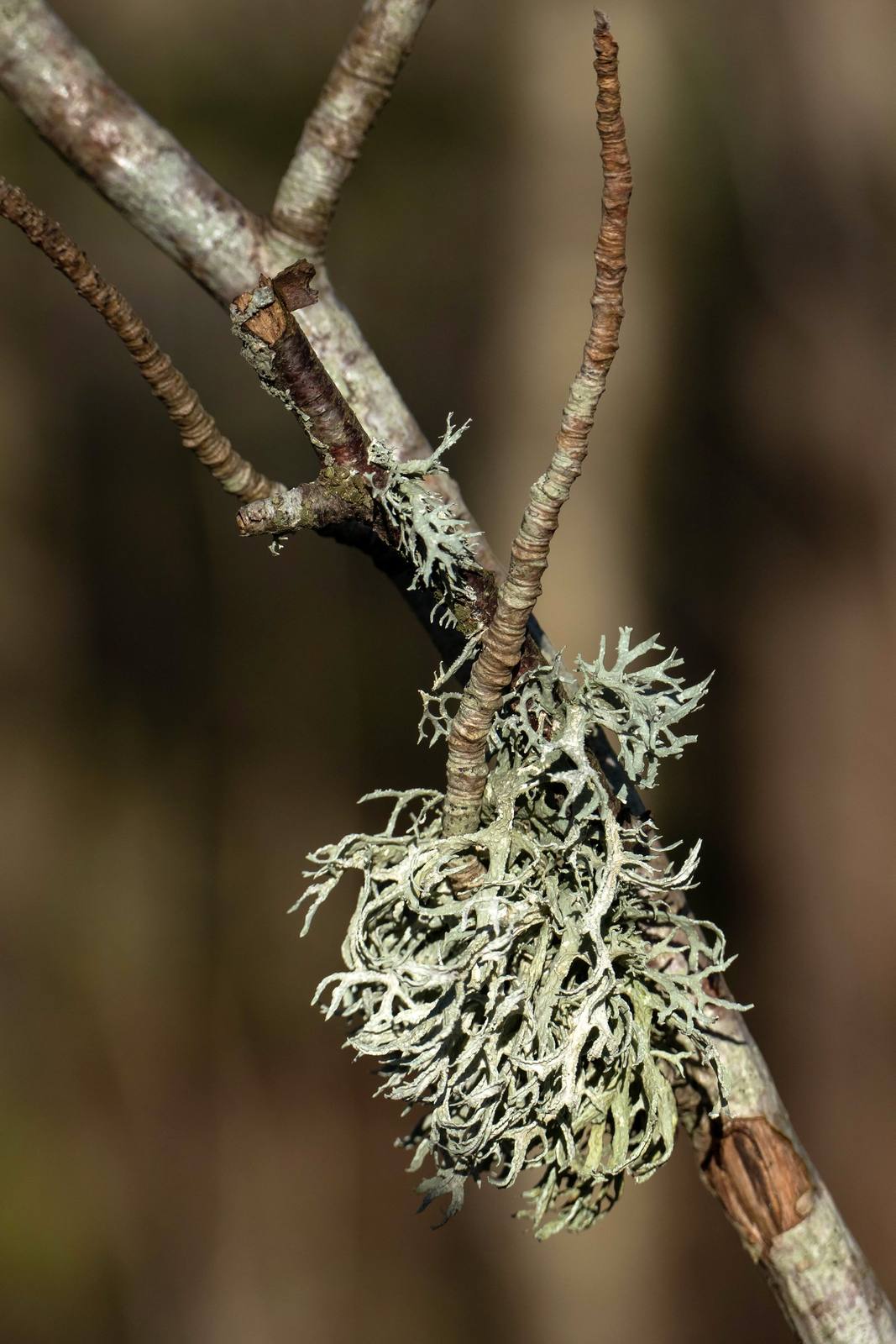
Oakmoss is a lichen wearing a moss's name. The European Commission's scientific committee identifies the material precisely: extracts of Evernia prunastri, a lichen that grows primarily on oak trees, with its relative treemoss drawn mainly from Evernia furfuracea on pines. Harvested, dried and solvent extracted, the lichen becomes the dark, heavy absolute that perfumers file under the French name mousse de chêne, and for a century it was the load-bearing wall of an entire family of perfumes.
The supplier Eden Botanicals, which sells the absolute from France, describes what the perfumer actually receives: a very dark greenish brown, semi-solid mass that must be warmed gently before it will pour, solvent extracted from wild-harvested lichen. Its aroma profile, in the supplier's own listing, runs from dry, earthy, bark-like top notes down into moss, wood, decaying leaf and damp earth, with a fixative's tenacity. That is the forest floor in a jar, and it does in a formula what no bright material can: it holds the structure down and holds the scent on skin.
The architecture oakmoss made possible has a name and a birthday. In 1917 François Coty launched Chypre, built as a contrast between a sparkling citrus opening and a dark base of oakmoss and labdanum, and the family took the perfume's name. Jacques Guerlain's Mitsouko followed in 1919, wrapping peach and jasmine in the same mossy twilight. Coty and Guerlain turned a material into a grammar: brightness above, forest below, and the tension between the two as the perfume's subject.
The trouble was inside the lichen. The Commission's scientific committee recorded chemical analyses of commercial oakmoss absolute finding atranol and chloroatranol among its constituents, and dermatologists identified those two molecules as potent contact sensitisers, the components most responsible for allergic reactions to the material in patch testing. In 2011 the successor committee, the Scientific Committee on Consumer Safety, concluded that neither substance should be used in cosmetic products. The industry's own regulator moved in parallel: IFRA's standard for oakmoss extracts has required atranol and chloroatranol to be held below 100 parts per million each in the extract, a specification that untreated absolute cannot reliably meet.
Europe then wrote the conclusion into law. Commission Regulation (EU) 2017/1410, adopted on 2 August 2017, placed atranol and chloroatranol on the prohibited list of the Cosmetics Regulation. Products containing them could no longer be placed on the market from 23 August 2019, and stock already on shelves had to be withdrawn by 23 August 2021. Oakmoss extract itself was not banned. The molecules that made the old extract dangerous were, which in practice forced every extract to change.
No regulation of the last half century has reached deeper into the back catalogue. The classic chypres had been built with oakmoss used generously, as structure rather than seasoning, and there was no compliant way to keep those formulas untouched. Houses reformulated across the board: moss cut back to a measured accent, moss replaced in part by supporting materials, or moss removed and the base rebuilt from patchouli, vetiver, labdanum and cedar, with modern moss aroma chemicals supplying a cleaner version of the green bitterness. Drinkers of the old vintages noticed, which is why the secondhand market in pre-reformulation bottles is, in large part, a market in remembered oakmoss.
The material's rescue came from separation chemistry. Producers learned to fractionate the absolute, selectively stripping the two sensitising aldehydes down to trace levels while keeping the bulk of the lichen's scent intact. Eden Botanicals' safety guidance for its oakmoss absolute reflects the new discipline in miniature: a maximum dermal use level of 0.1 percent is recommended, with the sensitisation warning stated on the listing. Low-atranol oakmoss smells recognisably like its ancestor, a little smoother, a little less wild, and it lets a perfumer build a chypre that can legally be sold. Treemoss walks the same road under the same scrutiny, its own extracts held to similar criteria.
What the rule changed, finally, was not the existence of the forest but its dose. Oakmoss survives as a carefully measured ingredient inside a regulatory frame its first century never knew, and the chypre survives with it, rebuilt by perfumers who learned to suggest depth at a fraction of the old quantity. The forest is still there. It is entered now by a narrower gate, and the gate has a number on it: 100 parts per million.
One letter each week: what mattered in perfumery, and what to smell next.
Free. Unsubscribe anytime.