There is a jasmine that perfumers mean when they say jasmine, and it grows in the fields above Grasse. Jasminum grandiflorum is the species of classical perfumery, cultivated around the Provençal town since the 16th century, according to the jasmine guide published by Nose Paris. It is the jasmine at the center of the great floral architectures of the last hundred years, and it remains the reference against which the other jasmines are measured.
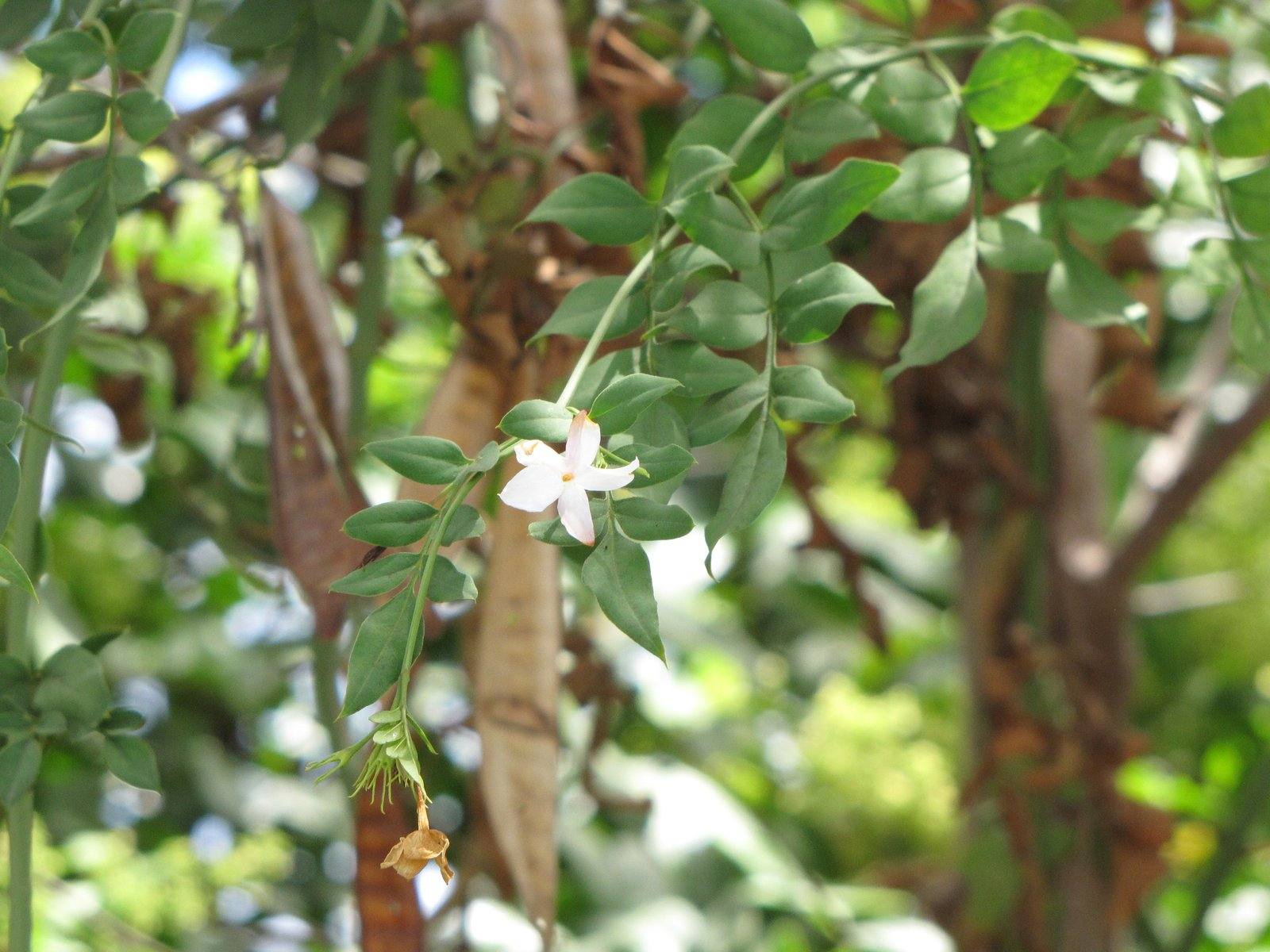
The plant itself gives no hint of the trouble it causes. Bon Parfumeur's journal describes jasmine as a climbing plant that can reach six meters, with dark green leaves and small white flowers of intense, sweet fragrance. The flowers are the whole story. Everything else, the picking, the speed, the chemistry, exists to serve a blossom that begins to die the moment it is picked.
Two jasmines, not one
There are more than two hundred species of jasmine. In fine perfumery, Nose Paris writes, two matter. Jasminum grandiflorum is the historical reference, cultivated since the 16th century in Grasse and today grown principally in Egypt, India, Morocco and the south of France. Jasminum sambac is the other jasmine, native to South Asia, the jasmine of temples, weddings and hair garlands, and only around a tenth of its harvest ever reaches the perfumer. The rest is reserved for religious and ceremonial use. Sambac runs March to September. Grandiflorum runs June to December. As Nose Paris puts the contrast:
Where Grandiflorum seduces, Sambac unsettles. In the right hands, that is exactly what makes it extraordinary. (Nose Paris)
The two smell like different instruments. Grandiflorum is the rich one, creamy and subtly fruited with an animalic undertow. Sambac is greener, more indolic, closer to orange blossom, with a tea-like quality that Nose Paris calls clean and white. Neither is better. They do different work, and the perfumer who confuses them has misunderstood the brief.
The window
The grandiflorum flower is harvested at dawn, by hand, and it begins losing its scent within hours of picking. In Grasse the season stretches from June to December, on plants between three and ten years old, and the blossoms are processed quickly because they are fragile and fade fast. Bon Parfumeur describes the standing routine: hand-picked early in the morning, when the flowers are most fragrant, then rushed to the extraction plant.
A 60 Minutes report from the jasmine fields that supply Chanel filled in the texture. The small white flowers are picked at sunrise, when they are most fragrant, each one by hand, because they are too delicate for machines. Heat can damage the petals, so the pickers keep the blossoms covered with a wet cloth to stay cool. If the flowers turn brown, they take on the smell of ripe fruit. It is a harvest conducted against the clock, every day, for months.
The yield
The arithmetic of jasmine is what perfumers call brutal. Nose Paris puts the figure at approximately 400 kilograms of fresh blossoms to produce one kilogram of absolute. The 60 Minutes report states that about 1,000 jasmine flowers go into a single bottle of Chanel No. 5. Take the number as poetry or as accounting. Either way it states the scale correctly: jasmine is a crop measured in handfuls, and a fine absolute is the compressed labor of a season.
From enfleurage to hexane
For generations the scent was captured by enfleurage, the slow laying of fresh blossoms onto fat-coated glass, the petals renewed again and again until the fat held the perfume. It was the method of Grasse for a century and a half. The predominant technique today, Bon Parfumeur notes, is extraction with volatile solvents, particularly hexane or petroleum ether. The 60 Minutes report describes the modern jasmine extraction as a multi-step process built on a 150-year-old technique developed in Grasse. The tools changed. The urgency did not.
Why Grasse
Grandiflorum grows in several countries now, but the Grasse flower keeps a reputation of its own. The perfumer Ayala Moriel, writing after a visit to the fields of Grasse, reports that jasmine grown in the local microclimate produces a very fine aroma, and that it is far lower in indole than Indian jasmine. Indole is the molecule behind the heavy, almost animalic edge of jasmine at full strength. Less of it means a clearer, more radiant flower. That is the Grasse signature: richness without weight, seduction without the snarl.
What it does in a formula
In a composition, grandiflorum absolute behaves as both heart and engine. Nose Paris describes it as rich, creamy and subtly fruited, with an animalic undertow, the jasmine that anchors classic floral compositions: dense, narcotic, present. It gives a floral formula its volume and its warmth, and it carries the other notes the way a good stage carries actors. This is why it sits, in some proportion, inside so many of the century's great florals, and why perfumers speak of jasmine as a structure rather than a decoration.
The harvest that decides a year
None of this can be hurried or stockpiled. A jasmine absolute is the record of a particular summer, a particular run of dawns, a particular speed of hands. When the season is good, the perfumer's palette has its center. When it is not, there is no substitute that behaves the same way, which is why the synthetic jasmine materials, accomplished as some are, have never retired the flower. The harvest decides the year. In Grasse, it always has.