The most romantic ingredient in perfumery has no scent at all when it is pulled from the ground. Iris, which perfumers call orris, is not made from the flower. It is made from the rhizome, the gnarled underground stem of the iris plant, and the fresh root is, in the words of the great raw-materials writer Arctander, practically odorless. Everything the perfumer loves about it is manufactured by time.
We call it iris. Perfumers, in their wisdom, refer to it as orris. (The Perfume Society)
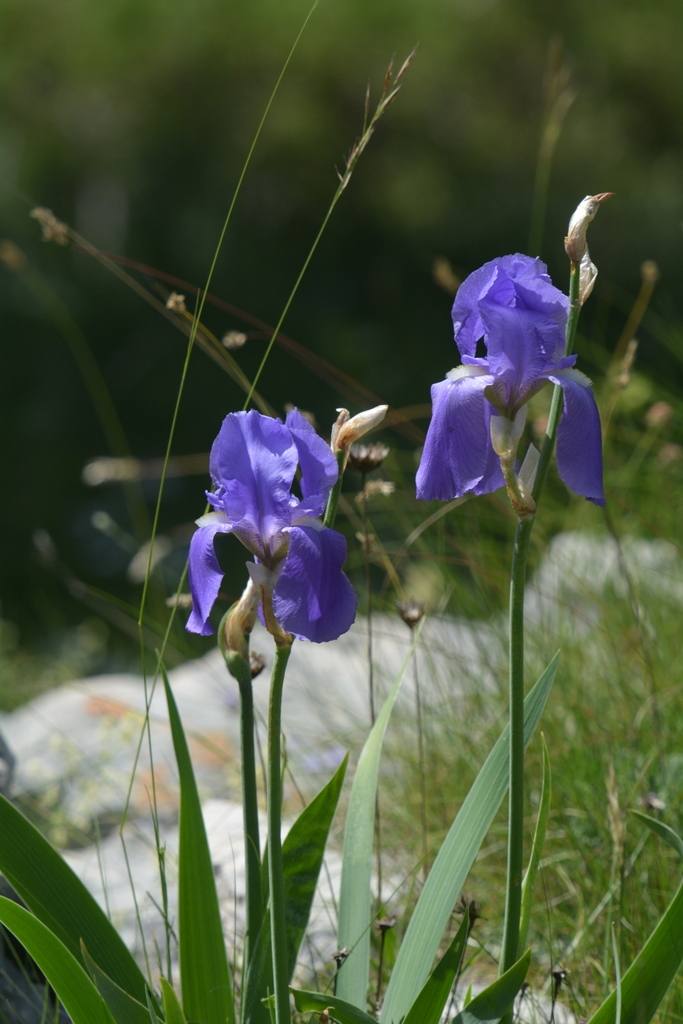
The useful species are three: Iris pallida, mauve in flower, Iris germanica, strongly purple, and Iris florentina, white. The Perfume Society's ingredient guide notes that pallida is the prized one, traditionally cultivated in Italy and France. But the species is only the beginning. The ingredient is the wait.
Years in the ground, years in the shed
The rhizomes must first grow. Eden Botanicals, citing the standard references, describes roots that have been in the ground for three years, then dried and aged for three more. Scentient Nature, a producer of the material, is more emphatic: the irises need at least three years in the ground for enough oil to concentrate in the rhizome, and then the harvested roots must be stored, dried and cured very gradually for at least three years more, ideally four or five, with regular checking and turning. The Perfume Society gives the range as three to five years to mature. The numbers vary by house and by source. The point does not: this is an ingredient measured in years, not seasons.
What happens in those years is chemistry at walking pace. The rhizomes contain precursors of the molecules called irones, and the intense violet-like odor develops only with time, through slow oxidative processes. Fresh orris roots, in Guenther's classic description quoted by Eden Botanicals, possess a rather disagreeable green and herby odor. The dried roots, upon aging, develop a faint violet odor, which the distillation then concentrates into something extraordinary. Rush the aging and the scent stays flat. There is no shortcut that the material does not punish.
The butter
When the roots are ready, they are washed, peeled, dried and ground to powder. Nearly a thousand tons of fresh rhizomes reduce to three hundred tons of powder, according to Eden Botanicals. One ton of that powder produces a mere two kilos of orris butter. The powder is steam distilled, and the oil solidifies in the receiver into a waxy, cream-colored mass. That is orris butter: technically an essential oil, physically a solid at room temperature, melting with warmth like coconut oil.
It is solid because of myristic acid, the primary constituent, a saturated fatty acid also found in palm and coconut oils. The acid makes the butter slightly difficult to use, since it is not soluble in alcohol at room temperature, but it also gives the material one of its most valued properties: it acts as a fixative, holding the more volatile notes of a composition on the skin.
What it does in a formula
Orris butter smells of soft violets. Eden Botanicals describes a delicate, sweet, warm, powdery-floral aroma with mellow woody undertones. The specialist house Enfleurage, which distills it in France from Tuscan-aged rhizomes, adds the detail: woody, fatty-oily, distinctly violet-like, with a fruity undertone, sweet-floral, warm and tenacious. The Perfume Society places it as an ultra-feminine heart note, powdery and elegant.
Its strange power is in dilution. The odor can seem delicate, even weak, at full strength. Highly diluted, it shows what Eden Botanicals calls its full and impressive strength and diffusion in the drydown. A little goes a long way. That is the signature of the irones: they do not shout, they persist.
There is a reason orris survived the century of synthetics that retired so many naturals. The violet note can be suggested many ways, but orris does not only suggest violet. It brings the powder, the fixative hum, the way a floral composition settles onto skin and stays there, softened and rounded, for hours. It is both a scent and a texture, and texture is the harder thing to replace. That is why it keeps its place in the formulas where elegance has to last: the powdery florals, the soft orientals, the compositions where the drydown matters more than the opening. And it is why the material is judged the way it is: not by strength, which it barely has, but by what happens in dilution, where Eden Botanicals says it shows its full and impressive strength and diffusion. The perfumer buys years. The years do the rest.
Why time is the ingredient
Orris is routinely described as one of the priciest materials in the perfumer's palette, and the price is honest. It is the cost of land occupied for years, of warehouses of drying roots that earn nothing while they wait, of a thousand tons of rhizome for two kilos of butter. The Perfume Society puts it simply: production of this note requires great patience, hence the hefty price tag, and time is money in perfumery.
But the deeper truth is that time is not the cost of orris. Time is the material. Without the years there are no irones, and without the irones there is no violet, no powder, no fixative hum beneath the florals. The root worth waiting years for is the rare ingredient that cannot be made faster, only waited for. In a century of acceleration, that may be why perfumers prize it most.