Culture
Incense to Instagram: 4,000 Years of Perfume in Twelve Objects
A history of fragrance told through the vessels that carried it, from temple braziers to the discovery set.
A history of fragrance told through the vessels that carried it, from temple braziers to the discovery set.
Perfume leaves almost no trace. The scent evaporates; the vessel remains. If you want to follow fragrance through four thousand years, you do not follow the liquid. You follow the objects. Here are twelve, in order, that tell the story.
Long before perfume was worn, it was burned. In ancient Egypt, incense rose in temple rites as an offering, and complex incense blends such as kyphi were compounded from resins, wine, honey, and aromatics. The brazier is the oldest perfume object of all: fragrance as prayer, going up in smoke.
By the classical world, scent had become personal. The alabastron, a small slender vessel often carved from alabaster, held perfumed oils for the body and the bath. It is the ancestor of every small luxury flask: precious contents, precious container, sized for a hand.
Rome industrialized what Greece had miniaturized. The unguentarium, a glass vessel for oils and unguents, was produced in vast numbers across the empire, and examples survive in museum collections from the Metropolitan Museum of Art to Lyon. Glassblowing made scent portable, and therefore democratic, at least by ancient standards.
The medieval Arab alchemists refined the art of distillation, and with it the possibility of capturing a flower's volatile soul as a liquid rather than a fat or a smoke. Rose water, the great medieval perfume, travels out of this apparatus and into the pharmacopoeias of two continents.
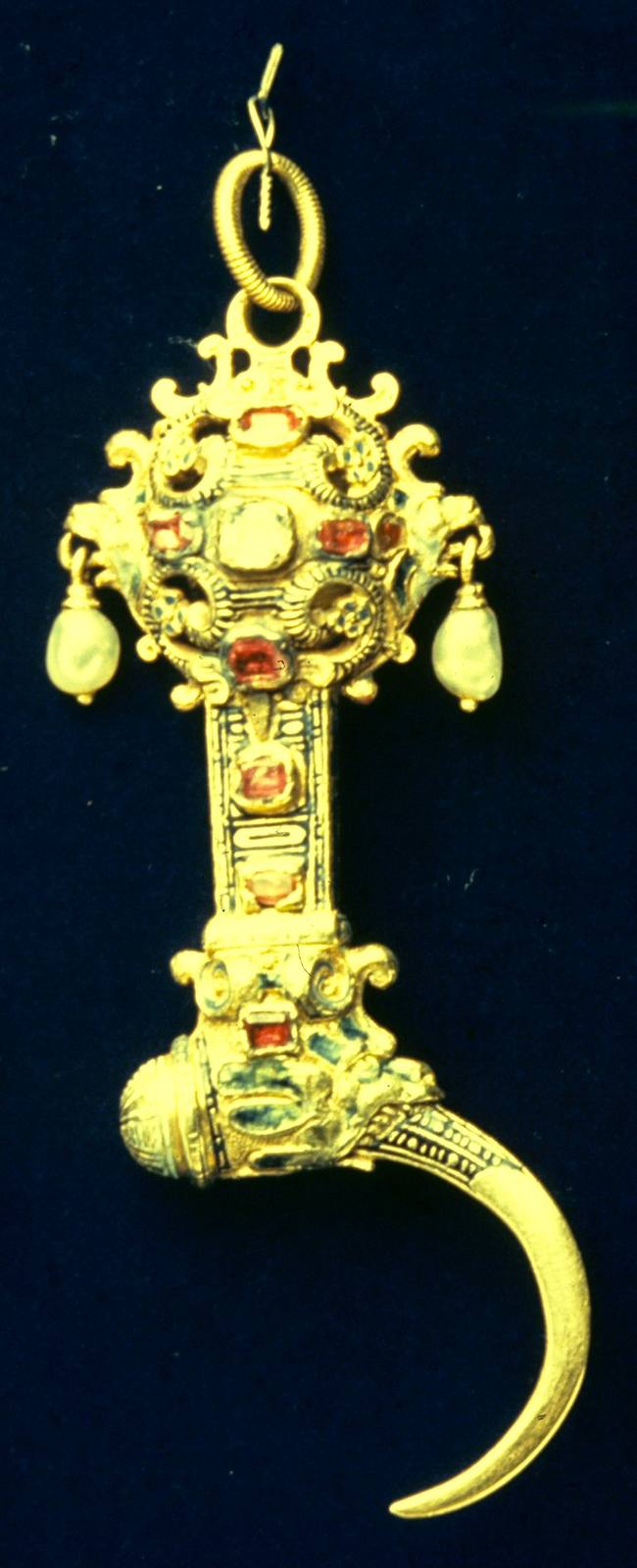
The object in our photograph: a pomander, from the French pomme d'ambre, amber apple. This pierced container of decorated metal, this one German and held by the Walters Art Museum, held balsam resin or ambergris and was worn at the waist or carried in the hand. In a century that believed disease traveled on bad air, scent was medicine, status, and self-defense at once.
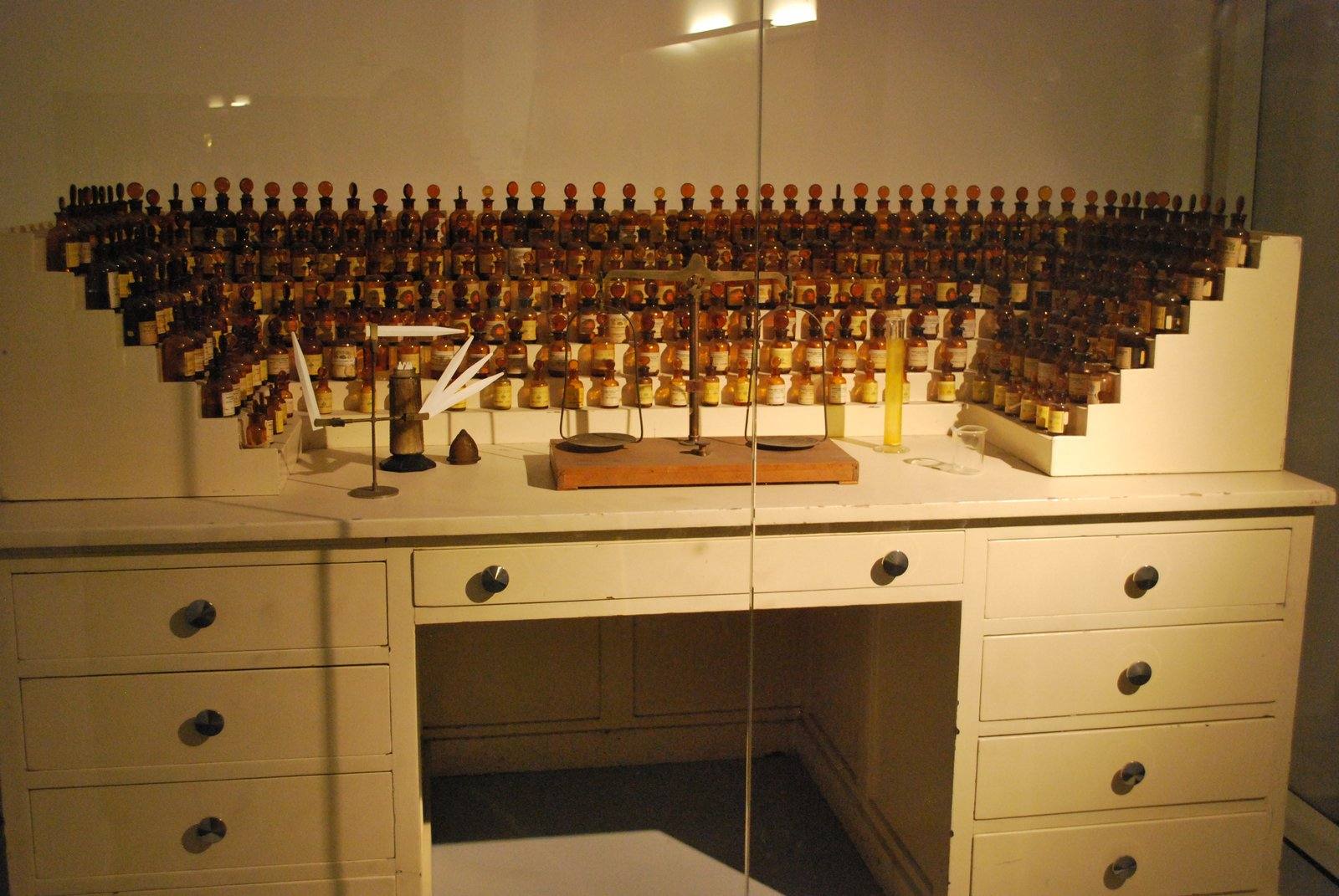
Grasse, now the world capital of perfume, began as a leather town. In the sixteenth century its glove makers perfumed their wares to mask the reek of the tanneries, using maceration: flowers pressed into animal fat until the fat took the perfume. The scented glove is the moment a manufacturing workaround became a luxury product, and the town never looked back.
In 1709, Johann Maria Farina created Eau de Cologne and named it for his adopted city. Until 1832 it was sold only in the slim green Rosoli bottle, stored horizontally because it was corked. The house of Farina still produces the original in Cologne, in the hands of the family's eighth and ninth generations. The oldest perfume house in the world is also a lesson in packaging continuity. Farina himself described the feeling in a 1708 letter to his brother:
I have found a fragrance that reminds me of an Italian spring morning, of mountain daffodils and orange blossoms after the rain. (Johann Maria Farina, in a 1708 letter to his brother)
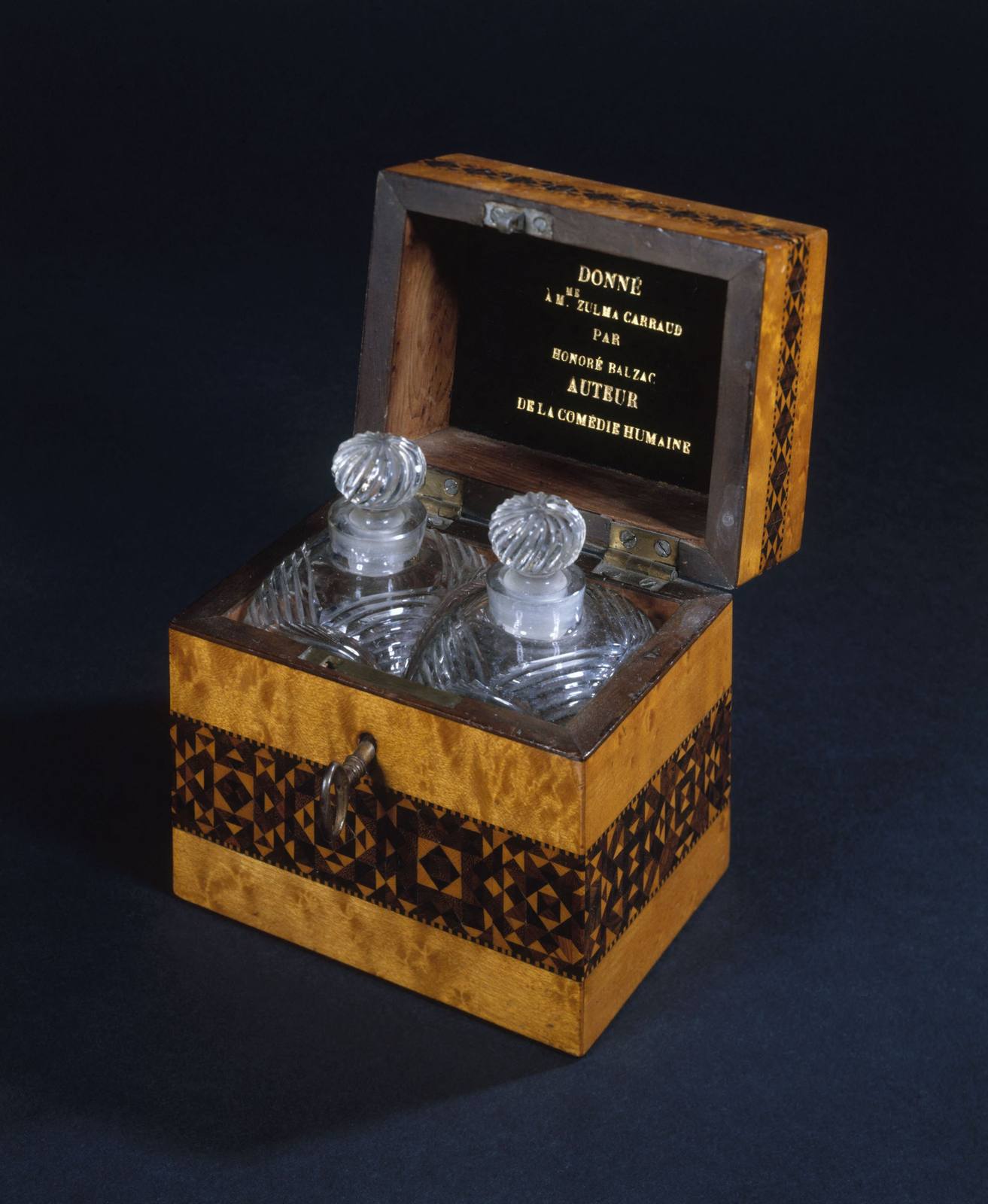
The nineteenth century gave scent a new social job: the smelling salts. The vinaigrette, a small pierced box holding an aromatic vinegar-soaked sponge, was carried by fashionable women as a restorative and a prop. It is perfume as theater, a gesture with an audience.
The late nineteenth century mechanized the mist. The atomizer, or pulvérisateur, turned liquid into a fine spray and changed how perfume was applied, and therefore how it was experienced: no longer dabbed from a stopper but diffused into the air around the wearer.
In 1853, Pierre-François-Pascal Guerlain created Eau de Cologne Impériale for Empress Eugénie and commissioned the glassmaker Pochet du Courval to make its bottle, covered in sixty-nine gilded bees, the emblem of the Empire. The commission earned Guerlain the title of perfumer to the imperial court. Here the vessel becomes diplomacy.
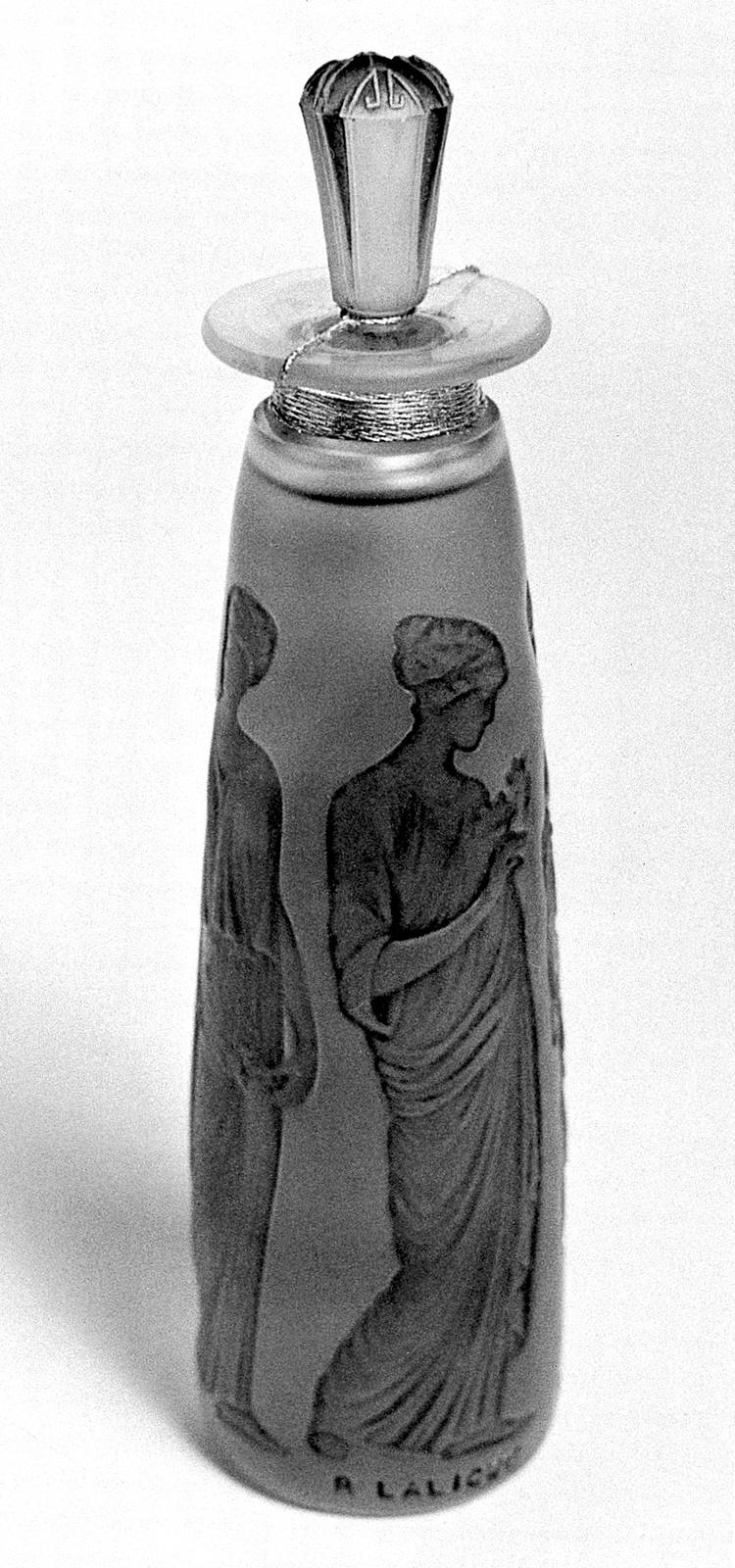
François Coty's partnership with René Lalique, beginning around 1908, made the bottle an authored work of art at industrial scale: frosted glass, patinated figures, molded signatures, sixteen designs for Coty alone. The flacon as brand architecture starts here.
Line the twelve up and a pattern emerges. Every few centuries, perfume changes its container because it has changed its idea of itself: offering, then adornment, then medicine, then merchandise, then art, then choice. The vessel always knows first. The brazier knew scent was sacred before the alabastron knew it was personal. The atomizer knew it was democratic before the discovery set knew it was overwhelmed.
There is a final symmetry worth noticing. The first object on this list turns perfume into smoke, something you cannot hold at all. The last turns it into a dozen tiny vials, something you hold but never keep. Four thousand years of vessels, and the industry is still circling the same paradox the temple priests understood: the product is invisible, so the object must speak. The next vessel, whatever it is, will be answering the same question. How do you hold something invisible, and what does the holding say about you?
One letter each week: what mattered in perfumery, and what to smell next.
Free. Unsubscribe anytime.