Culture
How to Smell: A Beginner's Guide to Training Your Nose
Perfumery students in Grasse learn hundreds of raw materials by heart; you can borrow their methods at home.
Perfumery students in Grasse learn hundreds of raw materials by heart; you can borrow their methods at home.
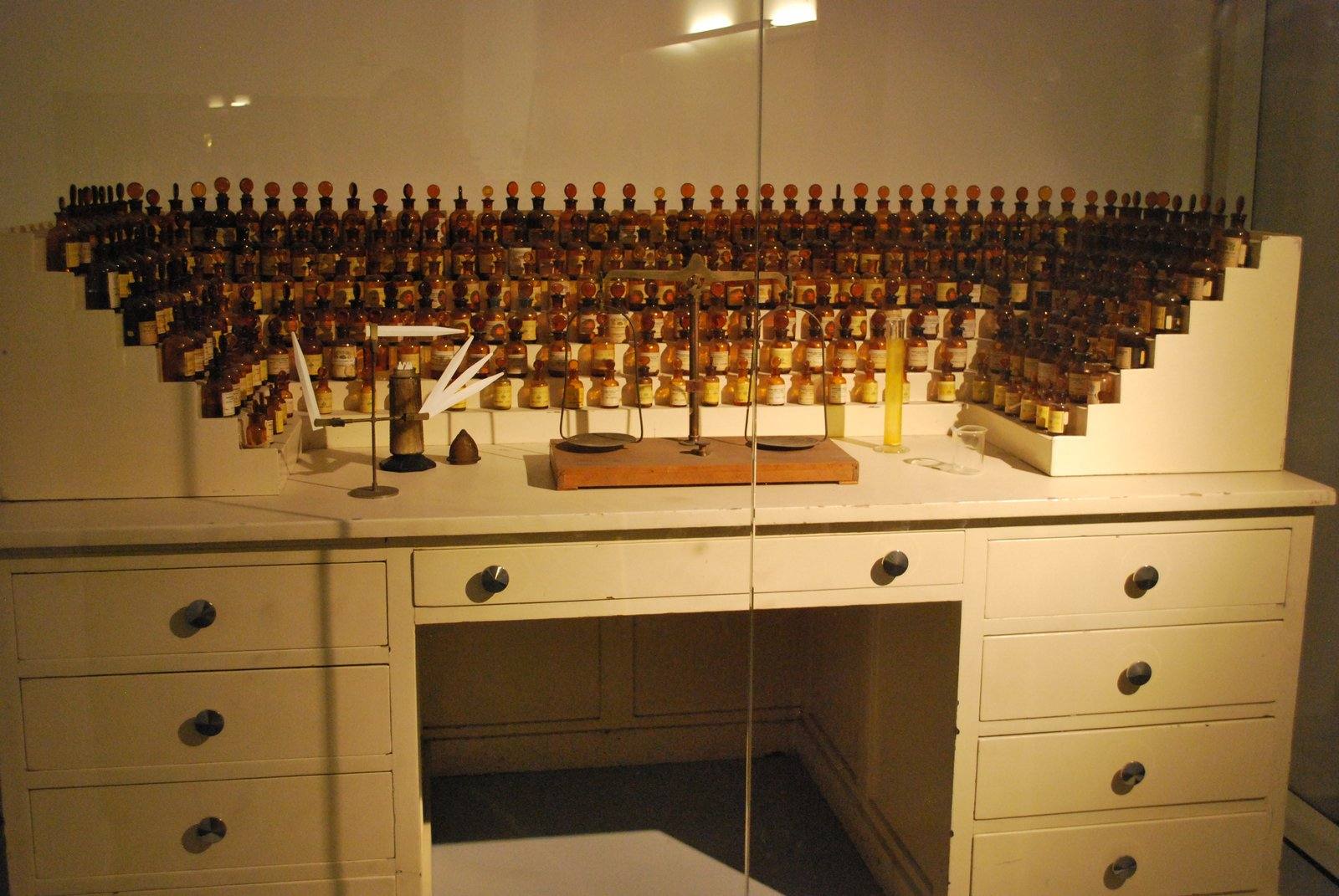
The photograph above shows a perfumer's organ, the tiered semicircle of essence bottles where a composer of scent works, photographed at the Musée International de la Parfumerie in Grasse. It looks like the instrument it is named for, and the name is not an accident. Learning to smell, like learning to play, is a matter of scales, repetition, and attention. The students who sit at these organs in Grasse did not arrive with extraordinary noses. They built them.
That is the encouraging truth the schools will tell you. The Grasse Institute of Perfumery, which runs workshops in the town where modern perfumery grew up, structures its beginner courses around the discovery of the main raw materials, natural and synthetic, followed by the creation of simple accords and visits to growers. The Paris school Cinquième Sens, which runs sessions in Grasse, is more explicit about the method: its introductory program teaches students to identify 144 raw materials, to understand the physiology of smell and, in its own words, how to smell and memorize odors, working with smelling strips and including its Olfactorium, a portable organ of raw materials, in the course materials. The tools are modest. The discipline is everything.
The smelling strip, the touche olfactive, is the student's first instrument. Dip it, wait a moment for the alcohol to lift, and hold it an inch from the nose. Short sniffs, not deep inhalations; the nose fatigues quickly and recovers slowly. Smell it fresh, then again after ten minutes, then after an hour. A raw material is not one smell but a sequence, and the schools teach students to follow the evaporation the way a musician follows a score.
At home, you need no laboratory. Essential oils from a reputable supplier, a pad of blotters, and a pencil will do. Label every strip before you smell it, or better, have someone label them for you. The blind test is the oldest exercise in the book: ten strips, ten materials, no names. You will be wrong constantly at first. That is the point. Error is how the memory forms, and the nose keeps score.
Beginners try to name perfumes. Students learn to name materials. The training moves from the simple to the complex: first the great families, citrus, floral, woody, amber, chypre, fougère, then the facets within them. Smell lemon, bergamot, and grapefruit side by side until the differences are obvious. Then rose, geranium, and palmarosa, three materials that share a rosy character and diverge on the details. Comparison is the fastest teacher the nose has.
Keep a scent journal, and be literal before you are lyrical. "Bright, sharp, clean, fades fast" is more useful than "like a morning in Provence." The schools insist on this discipline for a reason: vague poetry cannot be tested, and the nose improves on feedback. Date your entries. Revisit strips after a week and note what changed. Memory, as the researchers of the Proust phenomenon keep demonstrating, is the sense's native medium. You are training recall as much as perception.
You will not assemble two hundred essences in a year, and you should not try. A beginner's organ of twenty or thirty materials, refreshed as your curiosity dictates, is a serious instrument. Add a material only when you can recognize the ones you have. Keep dilutions consistent, a standard ten percent in perfumer's alcohol is the usual student strength, so that comparisons stay honest. Visit the sources when you can: the rose fields of Grasse in May, a distillery, a museum with a smelling collection. The International Perfume Museum's organ exists to be looked at, but its lesson is practical. Scent is a craft before it is a mystery.
A short catalog, because the schools see them every session. First, sniffing too hard. Deep inhalations flood the receptors and everything blurs; the short, shallow sniff is the unit of study. Second, judging on the strip alone. Paper lies a little: it shows the architecture but not the tenancy. Anything you seriously consider must be worn on skin, once, for a full day, through the drydown. Third, testing too many things at once. Four materials is a session. Ten is a fog. Fourth, trusting the first impression of naturals. A raw material like vetiver or costus can smell challenging, even unpleasant, in isolation and become beautiful in composition. The student's job is not to like everything. It is to recognize everything.
The last exercise is the simplest and the one students neglect. Smell the world on purpose. The rain on hot stone, the inside of a new book, the cold air of a cellar. The trained nose is not a different nose. It is an ordinary nose that has learned to pay attention.
One letter each week: what mattered in perfumery, and what to smell next.
Free. Unsubscribe anytime.