Perfumers
Jacques Guerlain's Ghost: The Lineage Guarding a Century of Formulas
Four generations of one family wrote the canon of French perfumery. The fifth guardian is not a Guerlain at all.
Four generations of one family wrote the canon of French perfumery. The fifth guardian is not a Guerlain at all.
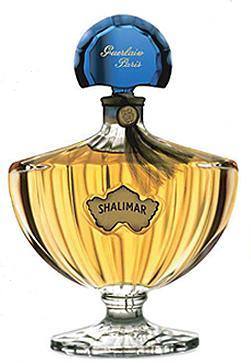
No perfumer in history has composed more canonical works than Jacques Edouard Guerlain. Born in Colombes in 1874, he became the third master perfumer of the house his grandfather Pierre-Francois Pascal Guerlain had founded in Paris in 1828. Between 1906 and 1955 he authored Apres l'Ondee (1906), L'Heure Bleue (1912), Mitsouko (1919), Shalimar (1925), Vol de Nuit (1933), and his final perfume, Ode (1955). He received the Legion of Honour. He never once granted an interview.
The silence was deliberate and total. Relatively little is known of his creative process or his personal life. What survives is the work itself, and the work survived because the house treated its formulas as family scripture. Many of Jacques Guerlain's major works are archived in their original form at the Osmotheque, the perfume conservatory, donated by his eventual successor Thierry Wasser on Guerlain's behalf in 2014.
Jean-Paul Guerlain, Jacques's grandson, became the fourth and final family master perfumer. He assisted on Ode at eighteen, then composed his first solo work, Vetiver, in 1959. Habit Rouge followed in 1965, Chamade in 1969, and, in collaboration with Anne-Marie Saget between 1975 and 1989, Nahema (1979), Jardins de Bagatelle (1983), Derby (1985), and Samsara (1989). Heritage (1992) and Coriolan (1998) closed the era. The family business itself had been sold to LVMH in 1994; Jean-Paul Guerlain retired in 2002, ending nearly two centuries of direct family succession at the organ.
Shalimar transcends fashion. Some perfumes accompany an era; Shalimar defines one.
Since 2008, the nose of Guerlain has been Thierry Wasser, the first perfumer in the company's history with no Guerlain blood. Trained at Givaudan, Wasser arrived with a mandate that sounds impossible: preserve a lineage while moving it forward. His signature creation, La Petite Robe Noire, became a global bestseller. He also became the house's great traveler, sourcing vetiver in India, roses in Iran and Bulgaria, vanilla in Tahiti, Madagascar, and Mexico, continuing a Guerlain tradition of long-term relationships with raw material producers.
Wasser describes his education in the house's canon with the awe of a student who knows exactly what he inherited. "The works of Guerlain being the pinnacle of perfumery," he said in an interview, "as a young perfumer you learn Shalimar you learn l'Heure Bleue you learn Nahema, you learn your Guerlain." On Shalimar at its centenary, he added: "Shalimar transcends fashion. Some perfumes accompany an era; Shalimar defines one. It speaks directly to emotion rather than to trend, and that is why it continues to captivate generation after generation."
The lineage is not only a matter of names. It is a matter of paper. The house's recipes are hand-written in a family formula book kept in a vault, a living document nearly two hundred years old. There is the Guerlinade, the signature accord of bergamot, iris, vanilla, tonka bean, rose, and jasmine that Jacques Guerlain formalized and that still runs through the house's creations. There are nineteenth-century techniques, tinctures and infusions, that Wasser says he had to learn on arrival because they remain part of Guerlain's signature.
The house Jacques inherited was already a legend. In 1889, his uncle Aimé Guerlain had created Jicky, the first fragrance described as a "parfum" rather than an Eau de Cologne, and one of the first to use synthetic ingredients alongside naturals. Jacques's own early work stood in that lineage: Mouchoir de Monsieur, created in 1904, is remembered as the first true perfume composed for men. Mitsouko and Shalimar were not a debut but a coronation.
Shalimar itself has never left the stage. Its flacon was blown by Baccarat and took first prize at the 1925 Decorative Arts Exhibition in Paris. It celebrated its centenary in 2025, and the house marked the occasion with Shalimar L'Essence, a reinterpretation for a new generation.
What made Jacques Guerlain's run so singular was not only the hit rate but the range. Apres l'Ondee (1906) is a study in melancholy, a rainy-day iris. L'Heure Bleue (1912) bottles the blue hour itself. Mitsouko (1919) pairs peach with oakmoss in a combination perfumery still imitates a century later. Shalimar (1925) is the oriental that defined the genre. Vol de Nuit (1933) evokes night flight. No other perfumer has produced so many works that stayed in production, in recognizable form, for so long.
All of them share the Guerlinade, the signature accord Jacques formalized: bergamot, iris, vanilla, tonka bean, rose, and jasmine. It is the family DNA, the reason a Guerlain from 1925 and a Guerlain from 2025 can sit on the same shelf and rhyme. Thierry Wasser has said he had to learn nineteenth-century techniques, tinctures and infusions, when he arrived, because they remain part of the house's signature. The ghost's methods are still the house's methods.
Jacques Guerlain left no interviews and no memoir. He left formulas, a vault, a signature accord, and a standard. The ghost still signs off on every bottle.
One letter each week: what mattered in perfumery, and what to smell next.
Free. Unsubscribe anytime.