Perfumers
Francis Kurkdjian: The Nose Who Bottled Paris
From a twenty-five-year-old's gamble on Le Male to his own Paris house, the perfumer who turned a city into an olfactory signature.
From a twenty-five-year-old's gamble on Le Male to his own Paris house, the perfumer who turned a city into an olfactory signature.
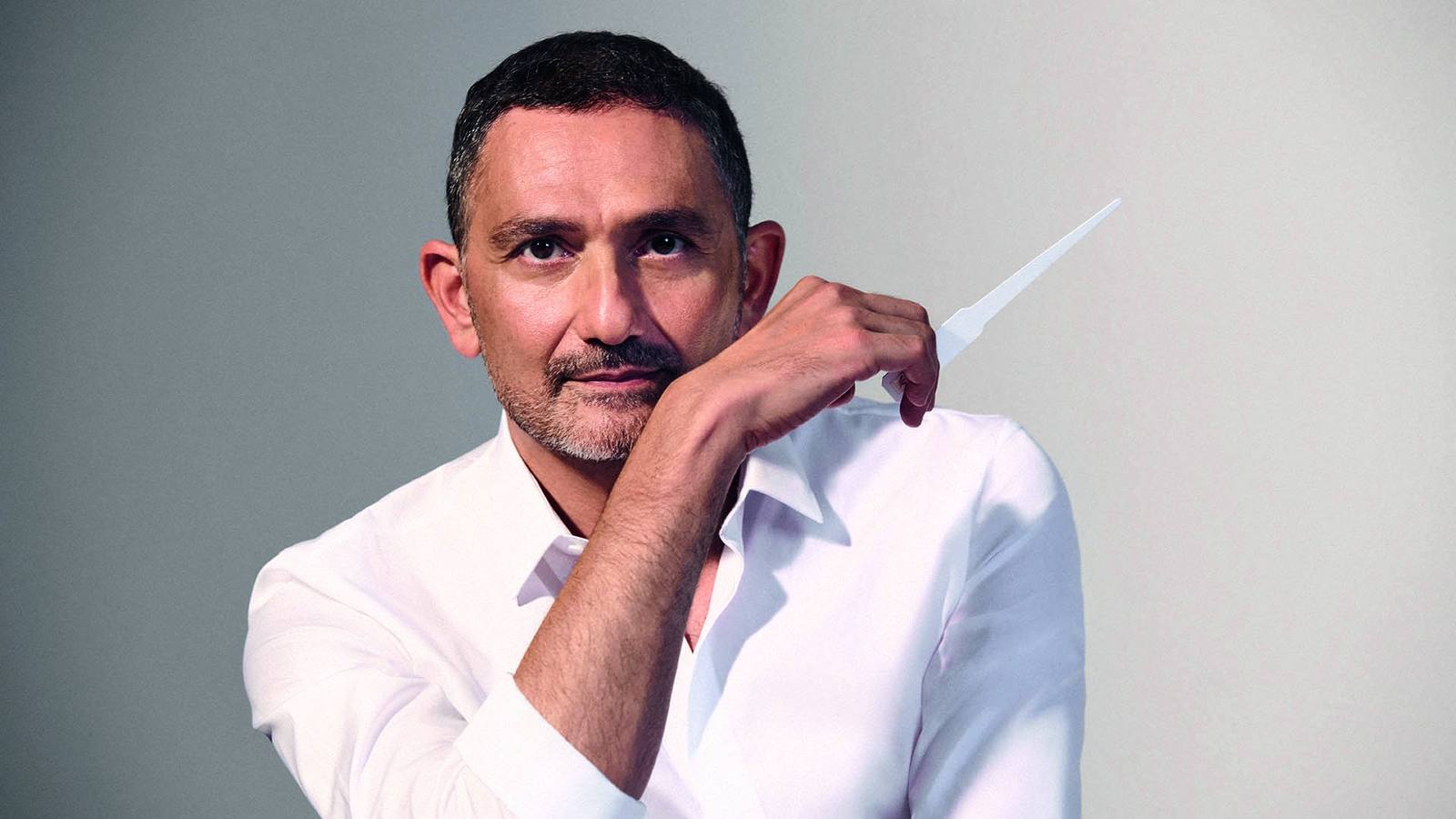
In 1995, a twenty-five-year-old perfumer fresh out of school created Le Male for Jean Paul Gaultier. The fragrance became one of the best-selling men's perfumes in the world. Its creator, Francis Kurkdjian, was just getting started.
Kurkdjian was born in Paris on May 14, 1969, to Armenian parents. As a boy he wanted to be a ballet dancer. When he failed the competition to enter the Paris Opera Ballet School in 1983, he turned to a fascination he had carried since the age of thirteen: perfume making. He decided to become a perfumer in 1985, entered the Institut Superieur International du Parfum, de la Cosmetique et de l'Aromatique Alimentaire (ISIPCA) in Versailles in 1990, graduated in 1993, and joined Quest International in Paris the same year. He completed a master's degree at the Paris Institute of Luxury Marketing alongside his early working years.
Le Male arrived when Kurkdjian was barely out of his apprenticeship. One hit that early can end a career as easily as it starts one; the industry loves a prodigy and then asks what he will do next. Kurkdjian answered by doing what no perfumer of his generation had done. In 2001, he opened the first bespoke fragrance atelier under his own name, at a moment when the market was racing toward democratization. Clients came to him for one-of-one compositions. The fundamentals he built there, the typography, the logo, the bottle with its octagon turned square, would later become the visual grammar of his house.
Along the way he composed for the grandest names in the business. His curriculum includes creations for Dior, Guerlain, Armani, Narciso Rodriguez, Burberry, Lanvin, and Van Cleef and Arpels, among others. In 2001 he received the Prix Francois Coty for lifetime achievement. In 2008, the French government named him a Chevalier des Arts et des Lettres.
In 2009, Kurkdjian co-founded Maison Francis Kurkdjian in Paris with business partner Marc Chaya, a former Ernst and Young partner. The brand was purchased by LVMH in 2017 for an undisclosed sum, with Kurkdjian continuing as creative director and Chaya as chief executive.
Paris is the house's declared subject. "Maison Francis Kurkdjian is a tribute to Paris, its magic and its spirit of freedom," Kurkdjian has said. His travels, he explained in an interview, always bring him back to the city's heterogeneous population, to its light, the shade of its monuments, the gray of its rooftops, its incredible skyline, and the golden spires that puncture it. The bottles themselves carry the reference: the gray zinc and gold caps recall the rooftops of Paris.
In 2015 the house released Baccarat Rouge 540, created for the 250th anniversary of the Baccarat crystal manufacturer. It became one of the most recognized fragrances in the world, a bestseller whose saffron and amber-wood signature turned up everywhere from department stores to social media feeds.
Kurkdjian has also worked beyond the bottle. He re-created Marie-Antoinette's perfume for the Chateau de Versailles, composed olfactory installations in emblematic spaces, and staged perfumed performances that treat scent as a public, ephemeral art. His appointment as perfume creative director at Dior brought the archive habit full circle. For Miss Dior Parfum, the work began in the house's own records, and the fragrance he built leans on a fruitier jasmine than the composition it succeeds, drawing out the sensuality and depth the new brief asked for.
Before the maison, there was the atelier. In 2001, Kurkdjian became the first perfumer to propose bespoke scents under his own name, opening a made-to-measure fragrance studio in Paris. Nothing about it was easy. As he later recalled, he had to set up everything from packaging and method to public relations and pricing, and then find a clientele that did not really exist yet. The struggle defined the house that followed: the typography, the logo, the bottle with its octagon turned square, all of it was worked out in those bespoke years.
The philosophy survived the scale-up. "At Maison Francis Kurkdjian, I leave total freedom of expression to those who choose to wear my creations," he has said. The house he built with Marc Chaya does not dictate taste; it offers a wardrobe of fragrances, each composed as part of an ongoing olfactory score, and lets the wearer do the styling.
Three decades after Le Male, the arc holds together. The boy who missed ballet found another stage, and Paris has been his proscenium ever since.
One letter each week: what mattered in perfumery, and what to smell next.
Free. Unsubscribe anytime.