Houses
Christian Dior, Perfumer: How Couture and Scent Became One House
Before the New Look there was Miss Dior, and before the empire there was a conviction: a couture house is not complete without perfume.

Before the New Look there was Miss Dior, and before the empire there was a conviction: a couture house is not complete without perfume.
On February 12, 1947, Christian Dior showed his first couture collection at 30, Avenue Montaigne and changed the silhouette of the century. The Bar suit, the nipped waist, the yards of fabric: the New Look. Less remembered is what accompanied the clothes down the runway. Miss Dior, the designer's first fragrance, was launched at that very show, so that the scent and the silhouette arrived together. Dior did not add perfume to his house. He built the house with perfume already in it.
The fragrance company was created in 1947, a year after the couture house, and Dior's stance was unusual for the period. He described himself as a fashion and perfume designer, treating the two crafts as a single act of dress. Where rivals licensed their names to perfumers as an afterthought, Dior insisted that scent complete the couture. The founding idea was that a woman should be dressed from her gown to her trail, and the trail was the perfumer's province.
Miss Dior itself was a tribute. The house has long presented the fragrance as dedicated to Dior's sister Catherine, a Resistance fighter during the Second World War who later devoted herself to growing flowers, with the founder intending it to "leave a trail of desire in a woman's wake." The first bottle was dressed in the houndstooth that would become a house code. Decades later, when the perfume was reworked under Francis Kurkdjian, the house reached back to Catherine's own verdict on it: "Miss Dior? The young perfume of the House forever."
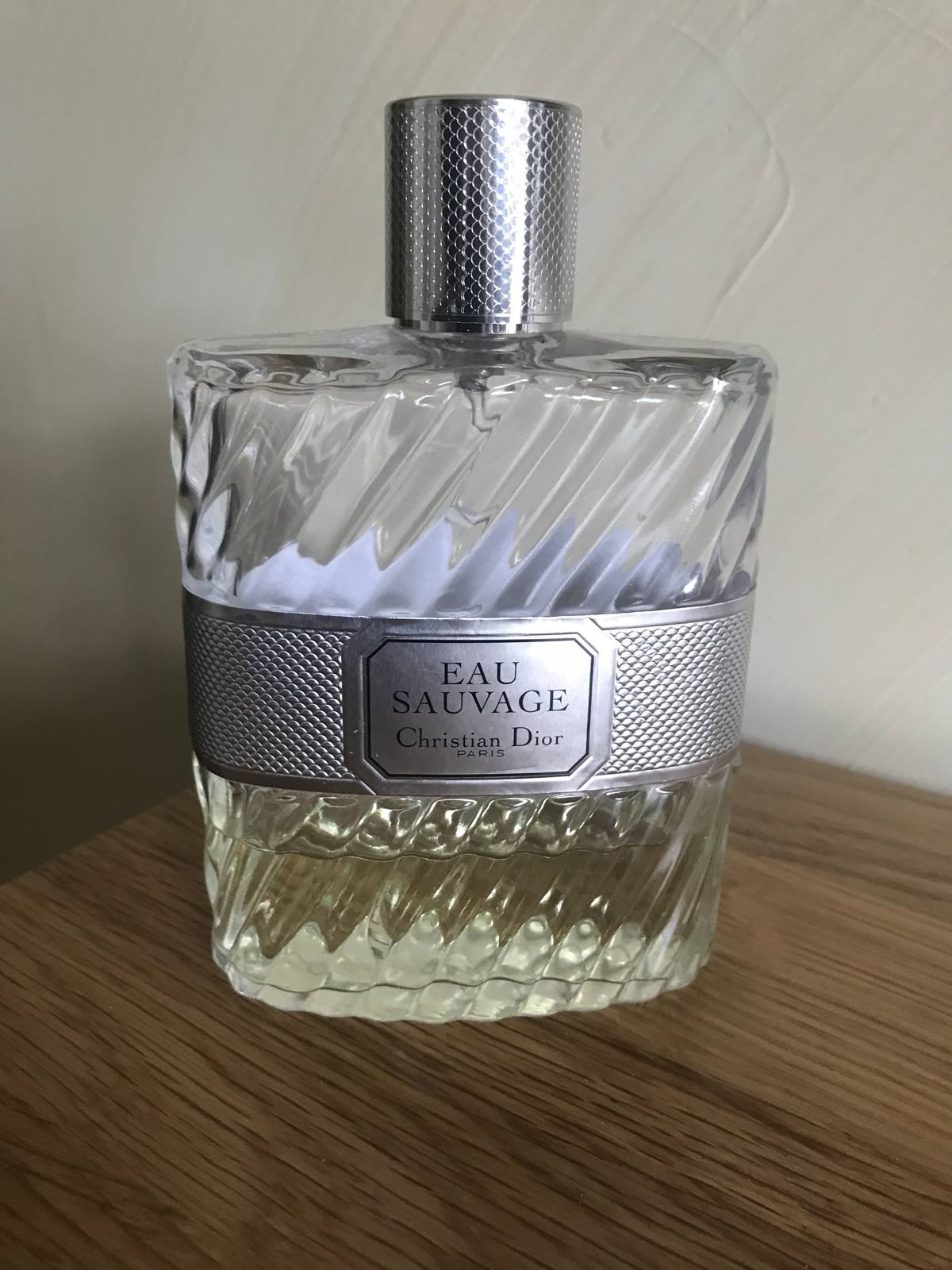
In 1949, Dior began the collaboration that defined the house's olfactory identity: the perfumer Edmond Roudnitska. Roudnitska was a scholar as much as a nose, and his work for Dior gave the house its classics. Diorissimo, his ode to lily of the valley, Dior's favorite flower, remains the reference muguet of perfumery. Eau Sauvage would follow later from the same hand. The partnership established the Dior method: a single creative authority, a long leash, and fragrances conceived as chapters in a couture narrative rather than products for a shelf.
The method needed a garden. The Dior family had lived at Callian, near Grasse, from 1934, and in 1951 the designer bought the Chateau de la Colle Noire in Montauroux, near Grasse, planting its fields with rose, jasmine, and lavender. The house still works with growers around Grasse for the May rose and jasmine at the heart of its florals, and the estate remains a working symbol of the Dior conviction that perfume begins in a field, not a laboratory. The scent of Dior has a postal code.
The later catalogue reads like the history of postwar French perfume: Eau Sauvage, Fahrenheit, Dune, Poison, J'adore, Sauvage. Some were composed in house, some by outside noses, but all were presented as Dior before anything else, chapters in the same book. In 2006, Francois Demachy became perfumer-creator, the house's first, formalizing a role Dior himself had always imagined: a nose with the authority of a couturier.
Today, under Francis Kurkdjian as Perfume Creation Director, the house has doubled down on the founding logic, treating Miss Dior and J'adore as couture objects to be recut each generation, like the Bar jacket. The recent Miss Dior reworkings have been explicit about the lineage, returning to Catherine Dior's flowers and the founder's 1947 brief. It is a rare thing in modern luxury: a heritage story that is actually true, documented in the house's own archives and in the fields of Grasse.
The garden program is the least visible and most important part of the modern house. Dior works in partnership with growers around Grasse for the May rose and jasmine that anchor its florals, a supply chain measured in fields rather than contracts. The Centifolia rose of Grasse, harvested for only a few weeks each May, and the jasmine of the surrounding hills go directly into the house's flagship compositions. It is the Colle Noire idea industrialized: the conviction that a luxury perfume should be traceable to a place, a season, and a harvest. Few houses of Dior's size maintain that discipline. It is expensive, weather-dependent, and completely invisible to the customer, which is precisely why it matters.
The continuity is the point. Most luxury houses treat their perfume archives as assets to be mined. Dior treats its archive as a text to be reread, each generation finding a new reading of Miss Dior that the founder would still recognize. The 1947 brief, a trail of desire, a flower for Catherine, a scent as integral as a seam, has survived every creative director, every market cycle, every reformulation. Seventy-nine years is a long time in fashion. In perfume, it is an eternity. The house has always recalled Catherine Dior's verdict on the perfume:
"Miss Dior? The young perfume of the House forever." Catherine Dior, as recalled by the house.
What Dior understood, earlier than almost anyone, is that perfume is not an accessory to luxury. It is its most intimate form. A gown is seen. A perfume is worn inside the body, exhaled with the breath, remembered long after the fabric is gone. He launched a couture house with a fragrance because he believed a woman is not dressed until she is perfumed. Seventy-nine years later, the house still acts on that belief, bottle after bottle.
One letter each week: what mattered in perfumery, and what to smell next.
Free. Unsubscribe anytime.